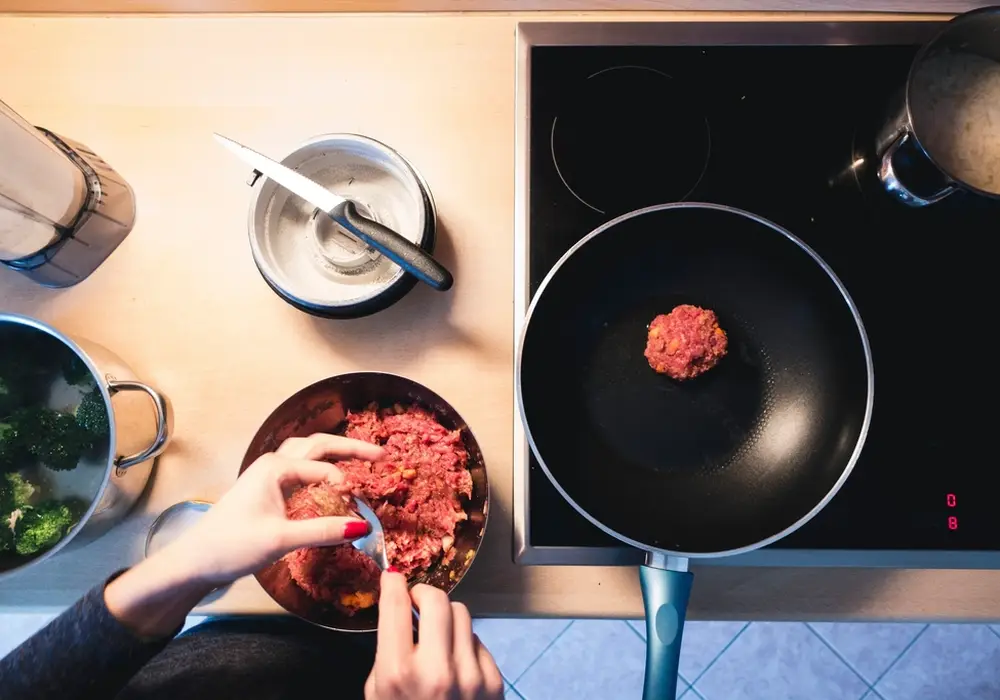
Leftovers are not ingredients — they are half-finished dishes
Most recipe tools fail leftovers quietly. They assume raw chicken, dry rice and whole vegetables, so the cooked chicken in your fridge matches nothing and the day-old rice might as well not exist. But cooked food is not a lesser ingredient — it is a head start. The protein is seasoned and done; the rice is dry in exactly the way frying wants; the roast vegetables are already sweet from the oven. A generator that understands this does not ask “what recipes contain chicken?” — it asks “what does cooked chicken want to become tonight?” The answer is rarely the dish it was yesterday, and that is the point: a second meal should taste like a new dinner, not a reheated apology.
That is why the leftover intent deserves its own tool rather than a filter on a recipe database. The patterns that rescue leftovers are a specific family — high-heat re-crisping (fried rice, hash), liquid rebirths (soup, curry), fresh contrasts (salads, tacos with sharp slaw) and binders (frittata, quesadillas, patties) — and they share one skill: making cooked food taste intentional again.
What each leftover wants to become
| Leftover | Best second meals | Why it works |
|---|---|---|
| Roast or rotisserie chicken | Tacos, noodle soup, fried rice, chopped salad, quesadillas | Already seasoned; shreds and crisps well; carries any cuisine’s sauce |
| Cooked rice | Fried rice, rice patties, soup, grain salad | Day-old grains fry instead of steaming — fried rice demands them |
| Roast vegetables | Frittata, skillet hash, grain salad, flatbread topping | Caramelised edges survive reheating; eggs and grains give them a new frame |
| Mashed potato | Potato patties, skillet hash, soup thickener | Binds and crisps; a ready-made base for patties with any filling |
| Grilled steak or salmon | Tacos, noodle soup, rice bowls, salads | Slice thin, add late and warm gently — never recook |
| Cooked pasta | Skillet pasta, pasta frittata, pasta salad | Re-crisps in a pan with oil; eggs turn it into a sliceable frittata |
| Bread going stale | Flatbread-style pizzas, crisp salads, egg bakes | Dry crumb drinks up dressing and sauce instead of going soggy |
| Surplus herbs & greens | Grain salads, smoothies, frittatas, sauces | Wilting greens cook down to nothing in eggs and grains — use them first |
How to generate from leftovers in RecipeGen
Step one: open the app and tap your leftovers in the picker — cooked chicken, rice, potatoes and vegetables are all there as ordinary ingredients, because to this engine they are. Step two: redirect the flavour with a cuisine. The cuisine choice is what separates a second meal from a repeat: Sunday’s roast chicken with a Mexican pattern is tacos; with an Asian pattern it is noodle soup; with a Mediterranean pattern it is a chopped salad with lemon and herbs. Step three: set servings honestly — leftovers come in fixed amounts, so generate for the people the food can actually feed and let the grocery list suggest the side that stretches it. Step four: save the result. Households that cook in chains — roast on Sunday, generate on Monday — build a saved library of second meals that makes the next roast easier to plan.
One roast chicken, three dinners
A worked example, because leftovers reward planning one meal ahead. Sunday: roast a chicken with potatoes and carrots. Monday: pick the leftover chicken and carrots in the generator, choose Asian, and dinner is a noodle soup — the carcass, if you kept it, is the stock. Tuesday: the last of the chicken and the remaining rice meet the fried-rice pattern with peas and egg. Wednesday: nothing is left, and that is the success state: one bird, three distinct dinners, zero waste, and a grocery list across all three days that asked for noodles, peas, eggs and herbs — nothing more. The generator did not cook any of it. It just made sure each day’s starting point was yesterday’s finish.
Leftover safety, briefly and seriously
Second meals are only a good idea inside the safety window, so the short rules matter. Cool cooked food quickly and refrigerate it in shallow containers. Eat most leftovers within 3 to 4 days; freeze what you will not. Reheat until steaming hot throughout, and only reheat once. Give cooked rice extra care — cool it within about an hour, refrigerate, and use it the next day. Label containers with the cooking day, because “sometime this week” is how good food gets wasted and old food gets eaten. And the oldest rule is still the tiebreaker: when in doubt, throw it out — the generator will happily work with whatever else is in the fridge. (These are general home-kitchen guidelines, not a substitute for your local food-safety authority’s advice.)
Ready to see your fridge differently? How ingredient-first generation works → · The dinner generator →
Leftover questions
How does a leftover recipe generator work?
You tell it what cooked food you have — roast chicken, day-old rice, Sunday's vegetables — and it treats those leftovers as first-class ingredients rather than raw ones. RecipeGen's engine matches them against dish patterns that are built for second meals (fried rice, soups, tacos, hashes, frittatas, salads), applies your cuisine and diet choices, and returns complete recipes with quantities and steps, plus a grocery list for anything small that is missing.
What can I make with leftover chicken?
Leftover chicken is the most versatile leftover there is: shred it into tacos or quesadillas, simmer it into a noodle soup, fold it through fried rice, chop it into a salad with a sharp dressing, or crisp it in a skillet hash. In the generator, select chicken as your protein and pick a cuisine — the same chicken becomes Mexican, Asian or Mediterranean depending on the sauce pattern chosen.
Is leftover rice safe to cook with?
Cooked rice needs a little respect: cool it quickly after cooking (within about an hour), refrigerate it, use it the next day where you can, and reheat it until it is steaming hot all the way through — once. Handled that way, day-old rice is not just safe, it is the correct ingredient for fried rice: cold, dry grains fry instead of steaming. When in doubt, throw it out.
How long do leftovers keep in the fridge?
As a general rule, most cooked dishes keep 3 to 4 days in a fridge at or below 4°C / 40°F. Portion leftovers into shallow containers so they chill fast, freeze anything you will not eat in that window, and label containers with the day they were cooked. Smell and appearance help, but the day count is the rule to trust.
My leftovers don't add up to a full recipe — what then?
Generate anyway. The generator shows you the recipes your leftovers nearly complete, and the grocery list names the one or two small items that finish them — often just eggs, a lemon or a bunch of herbs. Patterns like soup, frittata and fried rice are deliberately absorbent: they take odd amounts of three or four leftovers and return a coherent dinner.