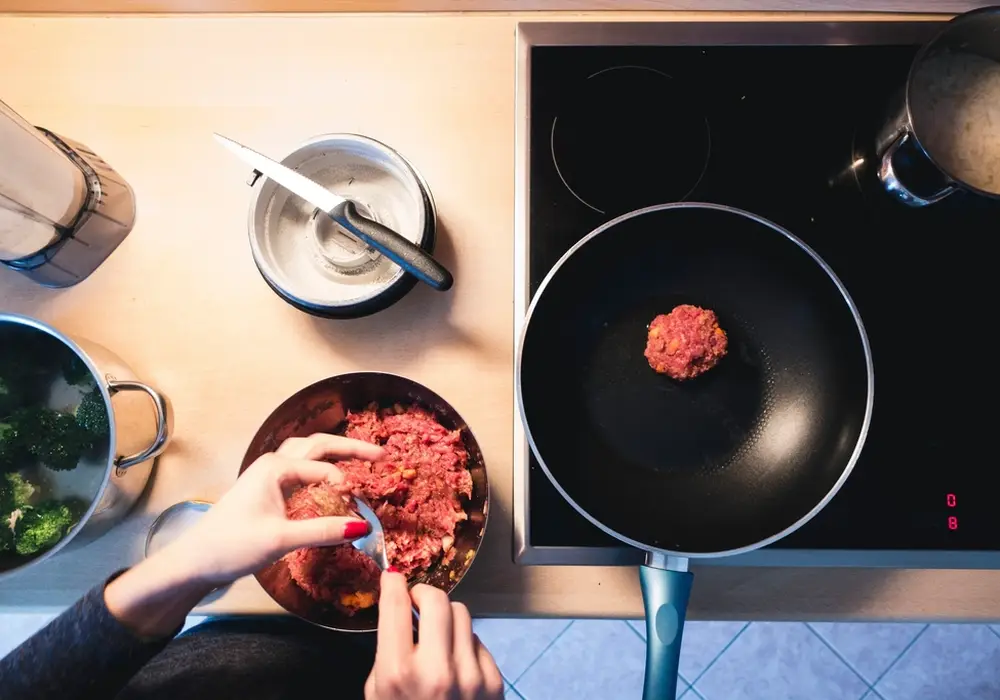
The 6pm problem is a decision problem
Almost nobody fails at dinner because they cannot cook. They fail because deciding what to cook — with a specific fridge, a specific evening and specific appetites — is a small research project scheduled at the worst hour of the day. The result is the rotation of five fallback meals, the takeaway app, or the expensive emergency shop. A dinner generator removes the research project. Your constraints (these ingredients, this much time, this diet) go in; three viable dinners come out. Choosing between three good options takes seconds and — this matters — any of the three would have been fine, which is what makes choosing easy.
Dinner patterns by the time you actually have
| Time | Patterns | The shape of the evening |
|---|---|---|
| 10–15 min | Chopped salads, sandwiches, quesadillas | Assembly, not cooking — for the truly spent nights |
| 20–25 min | Stir-fries, fried rice, pastas, frittatas, hashes | The weeknight core: one pan or one pot, real cooking, fast |
| 30–40 min | Curries, sheet-pan dinners, noodle soups, risotto-adjacent rice | A little simmering; the house smells like someone cooks here |
| 45–50 min | Stews, mushroom risotto from the library | Weekend dinners and batch cooking for tomorrow |
The generator labels every result with its time, so the choice is honest before you commit. Notice the middle band: most generated dinners live at 20–25 minutes, because that is what the patterns were tuned for — the cuisines of working households everywhere, from wok cooking to pasta night, converge on the same half-hour physics.
Building a dinner from almost nothing
The generator’s minimum viable fridge is smaller than people think. Eggs plus anything is a frittata, a hash or fried rice. A tin of beans plus tortillas or rice is tacos or a smoky bowl. Pasta plus a canned tomato plus garlic is dinner, and has been for a century of Italian home cooks. Potatoes plus any protein is a hash or a sheet-pan. When your selection is thin, the grocery list becomes the useful output: it shows the one or two items — spinach, a lemon, a block of feta — that convert a thin fridge into three real options, so a five-minute shop replaces the emergency takeaway.
From one dinner to a habit
The cooks who use a generator weekly develop a rhythm: two generated dinners from the fridge, one library favourite, one new cuisine tried on the quieter evening, leftovers absorbed by Friday’s fried rice. Saved recipes accumulate into a personal repertoire — the dishes your household actually eats, with your quantities — and the grocery list shrinks as the pantry kit (spices, sauces, canned goods) matures. That is the compounding return on generating instead of searching: every week, the fridge gets smarter.
The habit has a measurable side effect worth naming: households that generate before they shop stop buying ingredients for meals that never happen. The aspirational aubergine, the single-use spice, the garnish herb for one photographable plate — these are the items that quietly inflate a grocery bill and a compost bin. A fridge-first week buys almost none of them, because every purchase must answer to a generated recipe that already exists. Dinner gets cheaper as a side effect of dinner getting decided — which is, in the end, the entire argument for the tool on this page.
Dinner for households that are not couples
The generator’s servings control exists because households differ. Solo cooks get proper one-person quantities — and patterns like fried rice and hashes that make leftovers worth having tomorrow. Families scale to six or eight with the spice quantities rising gently rather than doubling into harshness, and the plain-at-the-core patterns (tacos, pasta, pizza) let the table customise heat and toppings per plate. Flatmates and mixed diets can generate twice from the same fridge — once vegan, once not — and discover the two lists overlap almost entirely, which makes one shared shop possible. Shift workers lean on the make-ahead patterns: soups, stews and curries that improve overnight and reheat without sadness.
The Friday fridge audit
One five-minute ritual turns the dinner generator into a waste-reduction system: on Friday, before the weekend shop, open the fridge and tap everything perishable into the generator — the half cabbage, the softening mushrooms, the yogurt at its date, the herbs wilting in their bag. Generate Friday’s dinner from that selection alone. Whatever the patterns cannot use goes on the weekend list as a deliberate non-purchase: you stop buying replacements for food you already own. Households that adopt the audit routinely find their Friday dinner is free and their Saturday shop is shorter. It is the dinner generator’s least advertised and most valuable feature.
The anatomy of a generated dinner
Every dinner the generator returns has the same skeleton, and knowing it makes you faster. A protein anchor sized to the servings — roughly a palm-and-a-half per person. Two vegetables, because one is a side and two is a meal. A base or a deliberate absence of one — salads, hashes and sheet-pan dinners carry no base and lose nothing. A sauce or finish that names the cuisine: the glaze, the curry sauce, the dressing, the herbed oil. And a time that counts everything, chopping included. When a generated dinner disappoints, it is almost always one bone of the skeleton: the sauce was skipped, the second vegetable was dropped, or the protein was under-seasoned. Fix the bone, not the recipe.
The Sunday reset: stocking for a week of generated dinners
Generated dinners get better when the fridge is stocked for patterns rather than for specific recipes. The pattern shop is short: two proteins (one quick — eggs, tofu, shrimp, beans; one weekend — chicken, beef, salmon), four vegetables chosen for range (one leafy, one cruciferous, one root, one allium-and-pepper kit), two bases (rice plus one rotating: pasta, tortillas, noodles, potatoes), and the flavour bench topped up. From that shop, the week generates itself: the quick protein carries Monday, the leafy vegetable is used by Wednesday, the root lasts to Friday’s hash, and nothing in the crisper is a surprise. Compare the alternative — shopping for five specific recipes, with five specific garnish items used once — and the pattern shop is typically a third shorter and nearly waste-free. It is the grocery-list version of the generator’s whole philosophy: buy structures, generate specifics.
Leftovers are a dinner strategy, not an accident
The dinner generator quietly rewards cooking once for two nights. Tonight’s roast chicken is tomorrow’s tacos, noodle soup or chopped salad — select the leftover as the protein and the patterns reorganise around it. Tonight’s rice is tomorrow’s fried rice, a pattern that actively prefers day-old grains. Tonight’s curry is tomorrow’s lunch with no generator required at all. The households that spend least on dinner are rarely the ones with the cheapest recipes; they are the ones whose dinners chain. When you save a generated recipe, glance at its ingredients and ask the generator’s favourite question — what does this become tomorrow? — and let Friday’s fried rice absorb the answer.
Chaining has one rule worth keeping: cook the extra on purpose, in the same pan, at the same time. A second chicken breast grilled beside tonight’s two costs four minutes; the same chicken cooked from scratch tomorrow costs thirty. The generator cannot plan your chains for you — it has no memory of yesterday’s pan — but it is built to receive them: any cooked ingredient you name in the picker is treated as a first-class anchor, with patterns that assume it needs warming and saucing rather than cooking through. Dinner, in other words, compounds — and the generator is the interest.
When the generator should not decide
Honesty about scope: a generator is the wrong tool for the celebration dinner you have been imagining for a week, the recipe from your grandmother that exists in exactly one form, and the evening when cooking itself — slowly, from a book, with a glass of something — is the entertainment. Those dinners deserve search, memory and paper. The generator’s territory is the other three hundred nights a year: the Tuesdays and Thursdays where dinner is a logistics problem wearing an apron. Tools that know their territory get used; tools that claim every evening get uninstalled. RecipeGen claims the weeknights, and claims them completely — your ingredients, your diet, your servings, your list — and leaves the feast days to you.
Dinner questions
The questions below cover speed, servings, picky eaters, solo cooking and the exhausted-evening case — the five situations the dinner generator is asked about most.
What is the fastest dinner the generator can make?
Chopped salads and sandwiches land at 10–15 minutes; stir-fries, fried rice and quesadillas at 15–20. If speed is the whole point, set the meal to Dinner, pick ingredients that need no marinating, and the generator’s quickest patterns surface first in the results’ time labels.
I have nothing planned and it’s 6pm. Where do I start?
Open the app, tap the protein you have (or eggs, or a tin of beans — both count), tap two vegetables and whatever base is in the cupboard, and generate. You will have three dinners with steps in under a minute. The grocery list tells you if one small purchase — a lemon, a bag of spinach — would unlock the best of them.
Can the dinner generator handle picky eaters?
The patterns are deliberately plain at their core — tacos, quesadillas, pasta, flatbread pizza, patties — with the adventurous flavours in sauces and toppings that can be served on the side. Generate family dinners from the ingredients everyone accepts, and let the table customise.
How do I generate a dinner for one?
Set servings to 1 on the Generate screen. Quantities scale down properly — including the spices, which scale gently so a single portion still tastes seasoned — and the grocery list reflects the small amounts, which helps avoid buying family-size packs for solo cooking.
Can it plan a whole week of dinners?
RecipeGen generates tonight’s dinner rather than a week plan, but the loop is quick: generate, save the recipes you like across a few visits, and your saved library becomes a personal week of dinners with one combined grocery list. Five saved dinners is a working week.
What dinner should I generate when I’m exhausted?
The sheet-pan pattern (oven does everything), the soup pattern (one pot, forgiving), or the hash (one pan, breakfast-for-dinner energy). All three are in the generator — select whatever protein and vegetable you have and they will be among the options.